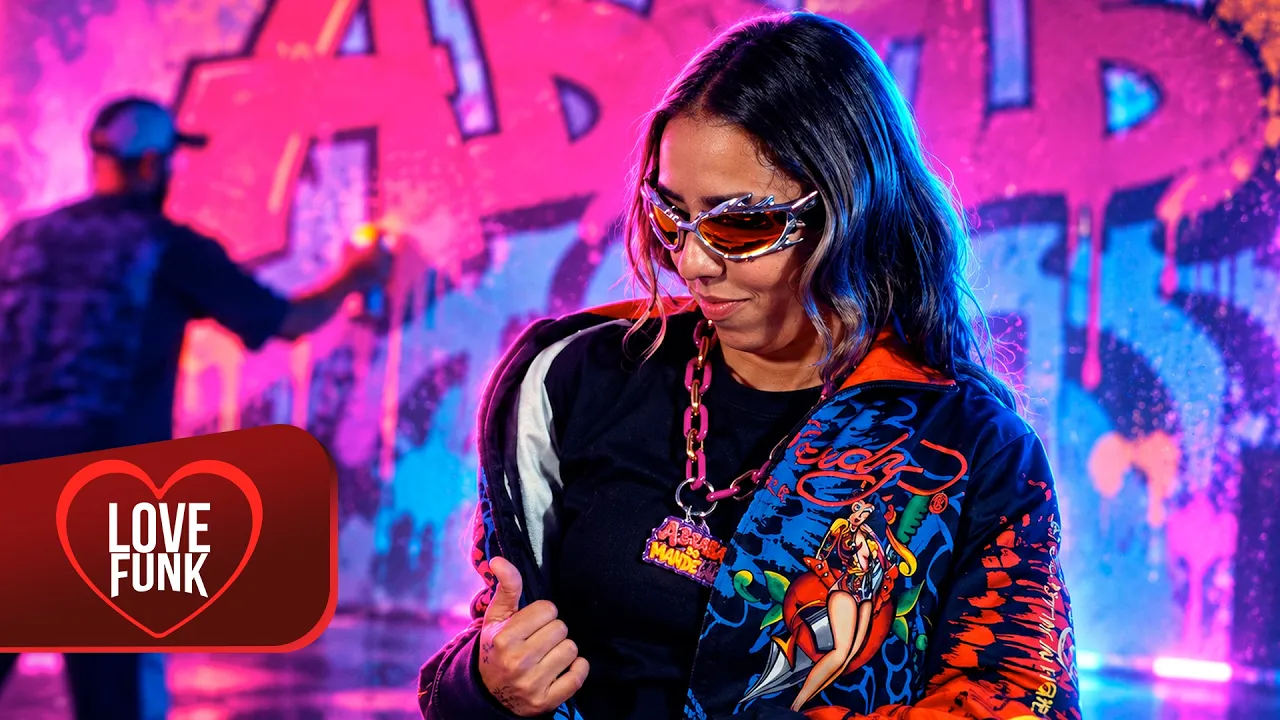


Walk into any party in São Paulo or Rio de Janeiro, and the sound coming through the floor is not a polite global pop approximation. It is an assertive, domestically built club culture running on heavy basslines, trap percussion, funk grooves, and pagode rhythms. Over 15 billion streams have made Rio singer-songwriter Ludmilla the most-consumed Afro-Latin artist in Spotify history, but her authority on home ground is defined by moving between dancefloors and traditional live formats. After launching her career as MC Beyoncé with the funk carioca track “Fala Mal de Mim” and issuing her 2014 debut Hoje, she turned club bangers like “Cheguei” and “Solta a Batida” into permanent fixtures. She has since expanded into live pagode through her audiovisual project Numanice 3: Ao Vivo—her first independent release, preceded by singles “Maliciosa” and “Falta de Mim”—featuring guest appearances from Mari Fernandez and trap MC Veigh, while her 18-track album Fragmentos brought together Ajuliacosta, Duquesa, and Victoria Monét alongside Veigh. Her track “BOTA,” recorded with Latto and Emilia, dominated Spotify Brasil as the biggest pop debut of 2026 for weeks.
São Luís-born pop star and drag queen Pabllo Vittar, who began singing in an Uberlândia nightclub before cutting through online with 2015’s “Open Bar” and her 2017 debut Vai Passar Mal, remains at the core of Brazil’s dance circuit. Vittar moves freely between regional northern styles and high-tempo club records, grounding releases like Batidão Tropical Vol. 2 in 1990s and 2000s forró eletrônico re-recordings. Vittar’s catalogue spans domestic anthems like “Então Vai” alongside Diplo, the 12-track project LOST IN LUST, and the ensemble club track “Joga Bunda” alongside Aretuza Lovi and Gloria Groove.
Groove herself, based in São Paulo and signed to SB Music, came up with 2017’s O Proceder before 2018’s “Bumbum de Ouro” shifted her profile nationwide. Moving between hip-hop, R&B, and dance rhythms on projects like LADY LESTE and Futuro Fluxo—which drew in Ludmilla, DJ GBR, MC Rick, and Anitta—Groove commands over 7.8 million monthly listeners. Her pagode release Serenata da GG, Vol. 1, featuring guest spots from Ferrugem, Alcione, Thiago Pantaleão, Gina Garcia, and Belo, topped 10 million streams within two weeks, pushed by “Nosso Primeiro Beijo,” which went viral on TikTok prior to release and became the most-streamed pagode track in the country on Spotify.
Rio singer IZA, discovered on YouTube by Warner Music in 2016 before her debut Dona de Mim, has built a steady catalogue of national chart hits. “Pesadão,” featuring Marcelo Falcão, went triple-platinum and hit number one on the pop charts, followed by the platinum-certified pop chart-toppers “Gueto” and “Sem Filtro,” alongside “Ginga” with Rincon Sapiência. She headlined the Skyline stage on the final night of The Town festival in 2025, supported by releases like the 2023 album Afrodhit, the live set IZA Rock in Rio (Ao Vivo), and the reggae-focused singles “Caos e Sal” and “Tão Bonito.”
Regional club styles remain foundational. From Jaboatão dos Guararapes, Pernambuco, MC Loma e As Gêmeas Lacração (sisters Mariely Santos and main songwriter Mirella Santos) exploded with the brega funk anthem “Envolvimento,” logging 94 million plays across its video cuts and entering the Spotify Top 200 within days during 2018’s carnival season. The group continued to fill floors with “Treme Treme,” the DJ BL collaboration “Rebola,” “Na vibe,” and a 2024 brega funk remix of “Envolvimento.” Santa Catarina’s Jade Baraldo introduced her sound through “Brasa”—which went to number one on Spotify Brazil’s Viral chart—and follow-ups like “Vou Passar,” before teaming with producer Mauricio Oliveira to deliver deep house tracks on her five-song EP INFAME.
Across town, Brazilian trap has emerged as a parallel force. Developing out of southern US rap variants, the sound established a distinct local market presence from 2020 onward, prompting artists to build self-run labels such as Trap The Fato, 30praum, Supernova, and Mainstreet. Veigh sat at number one on the RAP MÍDIA national chart with 10,769,417 monthly listeners after his debut pulled 6.5 million release-day plays and became the most-streamed album in the world on Spotify on May 21. Matuê placed eight songs simultaneously in the national top 200, taking number two with “Conexões de Máfia.” KayBlack’s EP Contradições landed all seven tracks in Spotify Brazil’s top 100, powered by the number-one track “Cartão Black” and “Melhor só.” Alongside names like WIU, Teto, Orochi, Oruam, L7NNON, MC Cabelinho, and Filipe Ret, these acts drove The Town to dedicate its Factory stage almost entirely to trap.
International crossover occurs strictly on these artists’ own terms. Vittar has worked on records like “Flash Pose” with Charli XCX, “Alibi” alongside Sevdaliza and Yseult, and “MEXE” with NMIXX. Yet the domestic club circuit runs primarily on local energy, where nights are still closed out by tracks like MC Kevinho’s “O Grave Bater” or MC Hariel’s “Tem Café.”
Sources
- Trap: como variação do rap ganha cara brasileira e vira febre que disputa paradas com sertanejos – Estadão
- Trap: como variação do rap ganha cara brasileira e vira febre que disputa paradas com sertanejos – Estadão
- Por que trap ganhou espaço em festivais, mas segue injustiçado nos rankings anuais do streaming? | G1
- Top 10: Artistas de Rap e Trap com mais ouvintes mensais
- Rap, Trap Funk 2026 Atualizado ∙ Hip Hop ∙ Funk ∙ Rap …
- FUNK | Brazilian Funk 2026 – Radial Brasil | Spotify
- Funk Hits 2026 ∙ Os Melhores Funks Atuais ∙ As Mais Tocadas
- Trap Funk 2026 Atualizado💎 SÓ AS BRABA! by Filtr
- Pabllo Vittar
- Listen to LOST IN LUST – Album by Pabllo Vittar | Spotify
- Pabllo Vittar | Spotify
- Após ‘Batidão Tropical 2’, Pabllo Vittar lançará outros volumes do projeto: ‘Calcinha Preta tem 30’
- Pabllo Vittar estreia em inglês com Charli XCX, mas perde 'brasilidade' ao focar no mercado internacional
- IZA: albums, songs, concerts
- Iza (cantora) – Wikipédia, a enciclopédia livre
- Discografia de Iza – Wikipédia, a enciclopédia livre
- IZA no Apple Music
- IZA inicia nova fase musical e mergulha no reggae
- Nova era de IZA: reggae, ancestralidade e singles inéditos – Billboard Brasil
- IZA – Dicionário Cravo Albin
- Iza faz ode à ancestralidade e à afirmação feminina no último dia do The Town
- MC Loma e As Gêmeas Lacração – Wikipédia, a enciclopédia livre
- MC Loma e As Gêmeas Lacração – Apple Music
- MC Loma e As Gêmeas Lacração | Spotify
- Gêmeas no vocal, clipes em série, DJs brega-funk: como MC Loma planeja ir além do viral 'Envolvimento' | G1
- Com música candidata a 'hit do carnaval', MC Loma e Gêmeas Lacração assinam contrato com gravadora | G1
- Gloria Groove – Wikidata
- Gloria Groove no Apple Music
- Gloria Groove | Spotify
- Gloria Groove | Spotify
- Gloria Groove: 'Serenata' me ofereceu a chance de voltar a falar do que eu sinto ser a minha origem'
- Gloria Groove
- Cantora brusquense Jade Baraldo fala sobre novo álbum e show no Rock in Rio 2019
- Cantora brusquense Jade Baraldo fala sobre novo álbum e show no Rock in Rio 2019
- TMDQA! Entrevista: após se consolidar na cena independente, Jade Baraldo mergulha em nova fase musical com gravadora e o desejo de alcançar mais pessoas
- Jade Baraldo se encontra no deep house com novo EP “INFAME”
- Conheça Jade Baraldo, cantora que embala trilha de Pantanal
- Análise de Jade Baraldo — Estatísticas de streaming, charts e mais
- Ludmilla – Wikipédia, a enciclopédia livre
- Ludmilla – Dicionário Cravo Albin da Música popular Brasileira
- LUDMILLA | Spotify
- Ludmilla é a artista afro-latina mais consumida da história do Spotify
- YouTube: Pabllo Vittar – Então Vai (Feat. Diplo) (Videoclipe Oficial)
- YouTube: Aretuza Lovi, Pabllo Vittar, Gloria Groove – Joga Bunda (Vídeo Oficial)
- YouTube: IZA – Ginga (Participação especial Rincon Sapiência)
- YouTube: IZA – Pesadão (Participação especial Marcelo Falcão)
- YouTube: MC Loma e as Gêmeas Lacração, Dj BL – Rebola | (Official Music Video)
- YouTube: MC Loma e as Gêmeas Lacração – Treme Treme |(Official Music Video)
- YouTube: Gloria Groove – Bumbum de Ouro (Clipe Oficial)
- YouTube: Jade Baraldo – Nem o Mar (Pôde Levar)
- YouTube: Jade Baraldo – Vou Passar
- YouTube: LUDMILLA – Solta a Batida (Clipe Oficial)
- YouTube: LUDMILLA – Cheguei (Clipe Oficial)